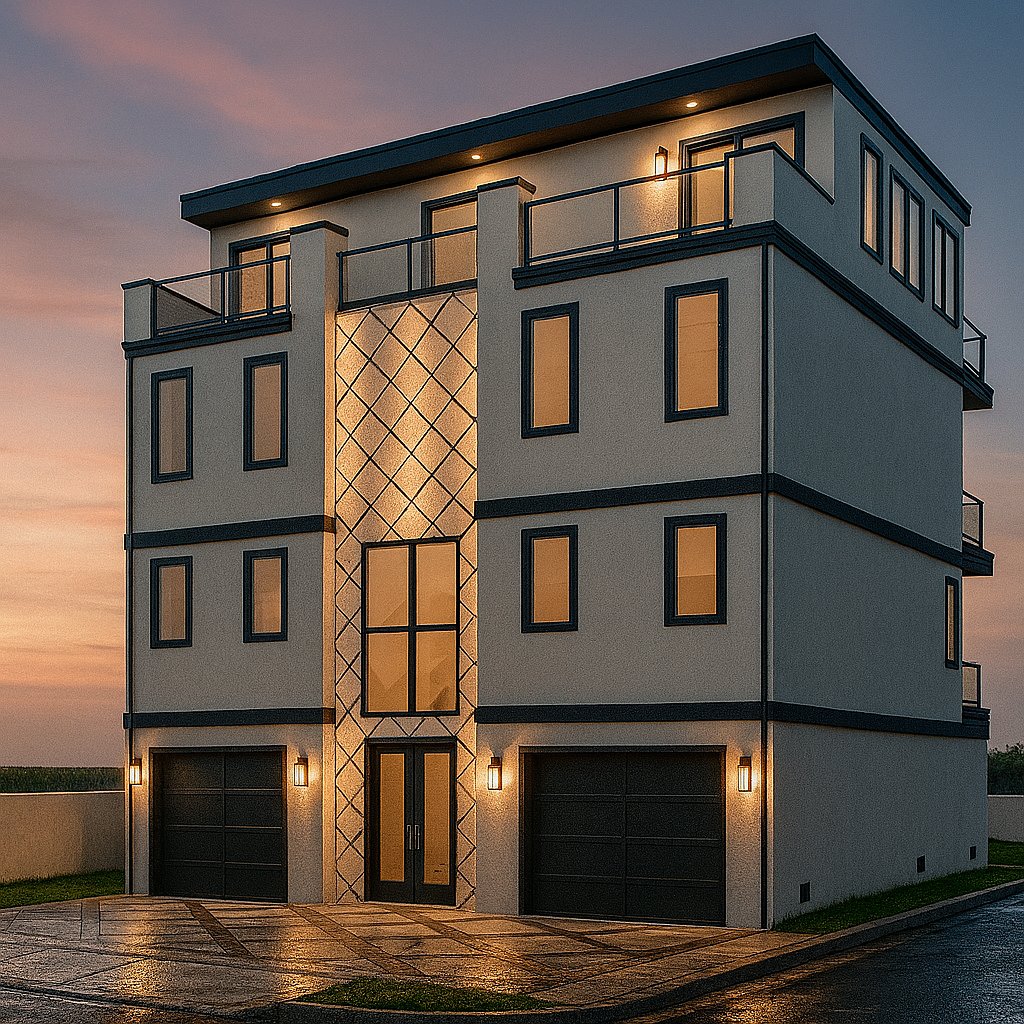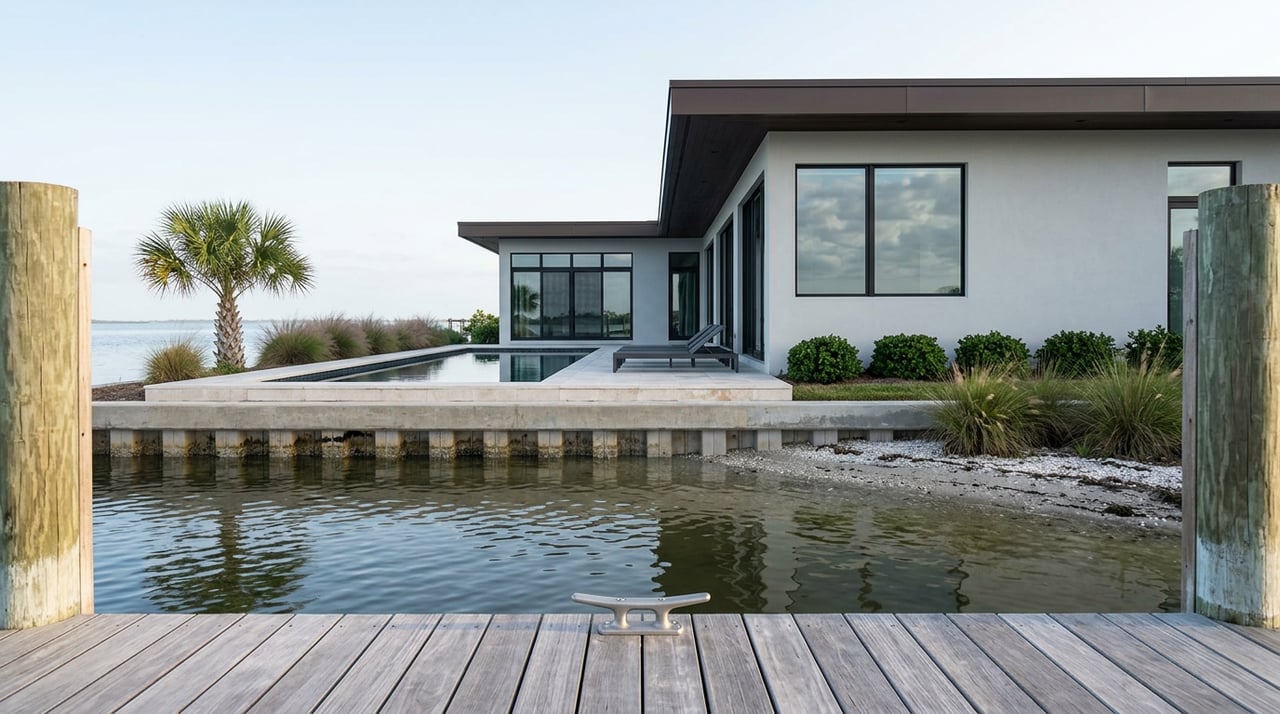
A buyer touring a homesite on one of Murrells Inlet's tidal creeks recently got a piece of information most listings never volunteer: getting a boat out to the Atlantic works best on a rising tide. Not any time. A window. That detail, buried in a land listing meant to sell the romance of a private dock, is the whole story of this market in miniature. The word "waterfront" gets stamped on properties that behave nothing alike, and the clearest proof is that Georgetown County is several years into a project that could cost as much as $37 million to fix the version of waterfront that doesn't work the way the word implies.
If you're comparing Murrells Inlet to other stops on the Grand Strand, that distinction matters more than the median price on any listing sheet. Three different products are hiding under one label here, and only one of them is what most out-of-town buyers picture when they hear "waterfront home in a South Carolina fishing village."
What "Waterfront" Actually Buys You Here
Murrells Inlet waterfront splits into three categories that behave, cost, and permit differently.
| Water Type | What You're Actually Buying | Price Signal | Real Friction |
|---|---|---|---|
| Oceanfront on the South Waccamaw Drive corridor, near Main Creek | Direct Atlantic frontage, no tide dependency to reach the beach | Has listed above $1 million, sometimes past $2 million | Falls under the state's beach and dune permitting authority; new construction has to sit behind a setback line calculated at 40 times the average annual erosion rate |
| ICW or canal frontage in calmer backwaters | Reliable depth most of the day, simpler dock engineering | Mid-range for waterfront, varies by community | Fewer marsh impact reviews, but bulkhead condition still drives cost |
| Tidal creek or marsh frontage off Main Creek's tributaries | Marsh views that photograph beautifully, a dock that may only clear the mud at higher tide | Has listed well under $700,000, with older waterfront condos on the northern stretch under $300,000 | This is the water type the county is spending tens of millions of dollars to fix |
That last row isn't a coincidence. The stretch of Main Creek tributaries the county is dredging is the same stretch where tide-dependent access shows up most often in listing language, and where prices sit lowest.
Further north along Waccamaw Drive, away from Main Creek, prices have historically dropped below seven figures even on the water. A six-bedroom home with about 2,300 square feet near the beach has listed for a little more than $700,000. A three-bedroom waterfront condo with roughly 1,000 square feet on the northern end has listed for under $300,000. Same corridor, same word on the listing, two very different products.
The Project That Proves the Point
Georgetown County started planning a dredging project for Murrells Inlet's channels back in 2019 and formally applied to the Army Corps of Engineers for a permit in 2023. The scope is not small: roughly 750,000 cubic yards of sediment removed from about 16.5 miles of natural and man-made channels, with the material disposed of at a site off Huntington Beach State Park. State Representative Lee Hewitt has put the project cost at around $35 million, funded in phases, with a separate $6.2 million Army Corps channel maintenance project running alongside it. A Post and Courier report from December 2024 put the figure closer to $37 million, with the county still short roughly $12.7 million even after securing more than $14 million in state money.
The point of all that money is spelled out plainly in the county's own funding request: restore adequate navigability for the general public, commercial operators, and property owners abutting the inlet. County officials were explicit about why back when the state first put money behind the project.
For a few hours a day during low tide, boats at Murrells Inlet's public landing simply can't get out.
That description of the bottleneck at the public boat landing is what the entire dredging project exists to solve, and nothing in the record since suggests the underlying tide problem has gone away in the meantime.
As of a comprehensive federal review conducted in February 2026, the Army Corps' Supplemental Information Report confirmed no new habitat protections have emerged since the original 2023 environmental assessment, which keeps the permit moving rather than restarting the clock. That's good news for the project's timeline, but it also underlines how long this kind of fix takes. Seven years from first planning to a permit that, as of this year's review, still hasn't cleared every step, is the honest answer to how quickly tidal access problems get solved by public infrastructure. A private buyer weighing a tidal creek lot against an oceanfront one should read that timeline as information, not just background noise. If the tide is working against your dock today, it will likely still be working against it for a while.
Environmental groups have raised concerns too. The Coastal Observer covered the project's comment period, noting objections from the S.C. Environmental Law Project over channels that have never been dredged before and disposal methods never used at this scale in South Carolina. None of that changes the underlying fact for a buyer: the reason this fight has gone on for years is that tidal creek access in Murrells Inlet is a real, documented, expensive problem, not a rumor.
Why a Dock Is Never Guaranteed
Even within a single waterfront community, dock access is not a fixed feature. Some properties carry deeded dock space. Others only offer shared access through a building's amenities. Some carry waterfront proximity with no direct water access at all. That variability shows up inside condo buildings and along private lots alike, which means the listing photo of a dock does not guarantee the unit you're buying comes with rights to use it.
Building or repairing anything over coastal water in South Carolina requires authorization from what contractors still commonly call OCRM, now organized as the Bureau of Coastal Management under the state's Department of Environmental Services following a 2024 restructuring. In Murrells Inlet specifically, that process commonly triggers a marsh impact review, and because Main Creek is a federally authorized waterway, work along it also requires separate written verification from the Army Corps of Engineers before anything begins. A simple dock repair can turn into a multi-month approval process before a single new piling goes in the ground.
The material matters too. Contractors working this stretch of coast report replacing pressure-treated pine docks after just ten or twelve years because the tidal movement and salt exposure are more aggressive here than in calmer ICW backwaters. Composite decking and marine-grade aluminum hold up better, at a higher upfront cost. For a buyer running the numbers on a tidal creek property, that's a maintenance line item the median sale price never captures.
Before assuming a waterfront listing includes usable dock rights, a buyer should ask for:
- Documentation of deeded dock space versus shared or no access
- The permitting history on any existing dock or bulkhead
- Whether the parcel falls within the county's active dredging footprint, particularly along Main Creek and its South Waccamaw tributaries, where the first phase of the project is targeted
- Recent maintenance records showing what material the dock was built from and when
The Median Price Is Lying to You (a Little)
Look at three separate readings of the Murrells Inlet market this year and you'll find medians ranging from $334,500 in April 2026 to $449,900 in July 2026 to $495,000 across the three months ending in June 2026. That's not three different housing markets. It's one fragmented market where condos on the northern stretch, tidal creek cottages, canal homes, and true oceanfront estates all get folded into a single number.
A median is only useful when the underlying inventory is roughly comparable. In a market where the same street can produce a $300,000 condo and a $2 million oceanfront estate, the median tells you almost nothing about what a specific property is worth. What matters is which of the three water types you're actually looking at, and whether that water type is the one the county is currently spending millions of dollars to make more reliable.
Quick Answers Before You Tour a Waterfront Listing
Does every Murrells Inlet waterfront home come with a dock? No. Dock rights vary by property, even within the same building or gated community. Confirm deeded access in writing before treating a photographed dock as part of the deal.
Will the dredging project affect a property I'm considering? The first phase targets Main Creek and its South Waccamaw tributaries in the Garden City area. If a parcel sits along one of those channels, ask your agent or the county's public services office whether it falls within the current phase, since construction timing can affect both access and noise during the work window.
Is oceanfront simply the safer bet? It solves the tide problem, but it comes with its own permitting layer under the state's beach and dune management rules, including a mandatory setback from the baseline. Oceanfront trades one kind of friction for another. Neither type is friction-free. The question is which friction you'd rather manage.
Murrells Inlet rewards buyers who read past the word "waterfront" and ask which version they're actually getting. For buyers who want that distinction handled before they ever step onto a dock, along with a build and brokerage team that already speaks fluently in Grand Strand water types, permitting timelines, and rental-ready construction, Modern Fortress is ready to walk the difference through in person. Schedule Your Private Tour and see exactly which kind of water you'd be buying.