Own along a tidal creek in Murrells Inlet and noticing your shoreline inch closer after storm tides and boat wakes? You want lasting protection that respects the marsh, fits your lot, and clears permits without surprises. In this guide, you’ll compare bulkheads, revetments, and living shorelines, learn what regulators look for, and see practical next steps that keep your timeline on track. Let’s dive in.
Murrells Inlet shoreline basics
Murrells Inlet is an estuarine setting with tidal creeks, marsh edges, and oyster habitat. Most residential shorelines here are not oceanfront. They sit on sheltered channels where energy varies by location.
Common erosion drivers include tidal currents and channel shifts, wakes from boats in narrow waterways, episodic storm surges, and gradual sea level rise. Human changes like dredging or removing marsh can also speed up erosion. Because energy levels differ by site, the right solution depends on your shoreline’s exposure and space.
In many low to moderate energy spots, living shorelines or hybrids can work well. Where boat wake or scour is intense, hard armoring may be needed to protect structures immediately.
Your main options explained
Bulkheads: vertical protection
A bulkhead is a vertical wall at the water’s edge made from timber, vinyl, steel, or concrete. It holds upland soils in place and sets a clear line of protection.
- Advantages: A bulkhead provides immediate, predictable protection and needs less horizontal space than a sloped approach. It is often viewed as neat and straightforward.
- Limitations: Bulkheads reflect wave energy, which can increase toe scour and affect adjacent properties. Over time, they can reduce intertidal habitat and may become costly to repair or replace as sea levels rise.
- Where it fits in Murrells Inlet: Choose a bulkhead when space is tight, you need vertical protection right away, or the site faces strong wakes or high localized energy. If habitat preservation is a priority, consider alternatives first.
Revetments: sloped armor
A revetment uses sloped stone or concrete to absorb and dissipate wave energy.
- Advantages: Revetments are permeable, flexible, and often long lasting when built with proper toe and filter layers. They reduce energy without the strong reflection of a vertical wall.
- Limitations: They require more horizontal footprint than a bulkhead and can still affect intertidal habitat. Their appearance depends on stone size and layout.
- Where it fits in Murrells Inlet: Use a revetment when energy is moderate, space allows a slope, or marsh-based options are not feasible. Revetments can be part of a hybrid design.
Living shorelines: soft or hybrid
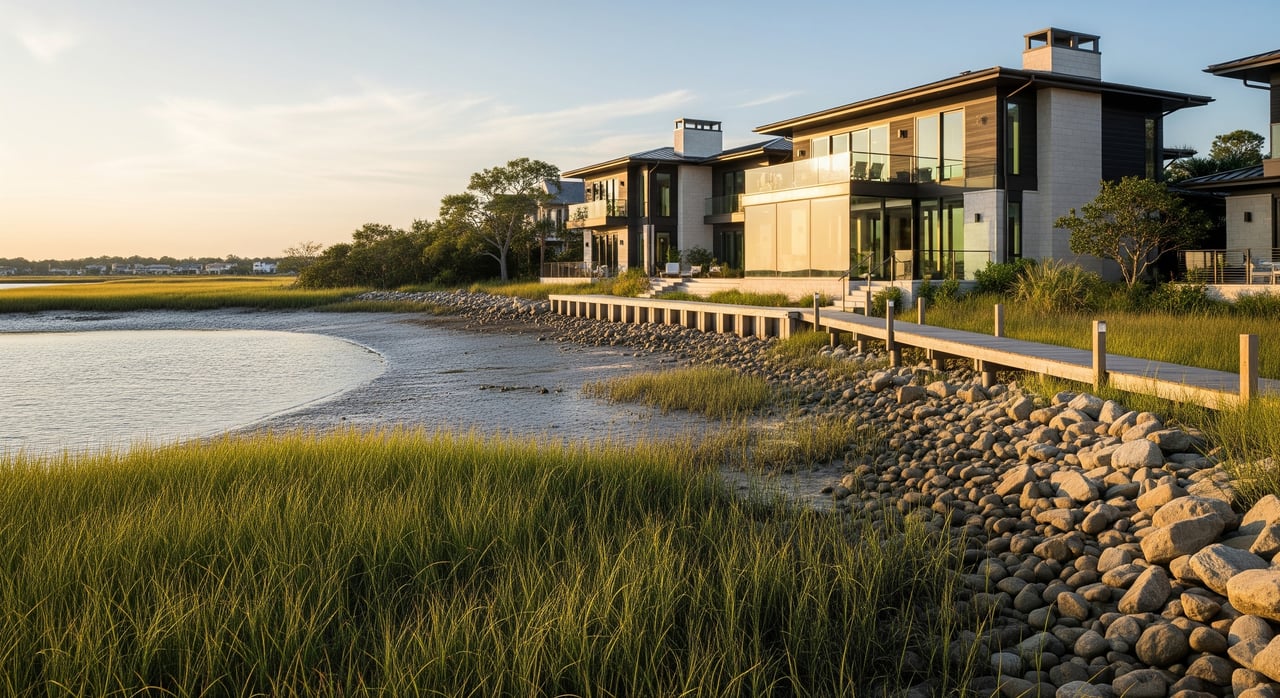
Living shorelines stabilize edges with native marsh, sand fill to set the right elevation, coir logs, oyster elements, and low rock or shell sills. Many projects pair a low-profile sill with planted marsh to protect the toe while habitat grows in.
- Advantages: Living shorelines preserve or restore habitat for fish, birds, and oysters. They can adapt to gradual sea level rise if sediment and space are available, and they often improve water quality and aesthetics. Many regulators prefer them when technically feasible.
- Limitations: They need enough horizontal room and the right elevations to establish marsh. Very high energy or active channel scour sites may overwhelm a living approach. Plants take time to mature, so full performance builds over months to years.
- Where it fits in Murrells Inlet: Many creek and marsh edges here are good candidates. A hybrid sill plus marsh is common in South Carolina and can deliver immediate toe protection with long-term habitat benefits.
What fits your lot
Use this quick checklist to align your shoreline choice with your property:
- Objective: Are you protecting a lawn or structure, stopping retreat, restoring marsh, or preserving access and views?
- Erosion drivers: Is wake energy from boats the main issue, or is it channel migration, storm surge, or general marsh retreat?
- Space and elevation: Do you have room for a sloped revetment or a vegetated bench, or is the footprint tight?
- Existing habitat: Is there tidal marsh, submerged aquatic vegetation, or oyster beds present that would factor into design and review?
- Adjacent conditions: What do neighboring properties use, and how might your choice affect them?
- Time horizon: How will the solution perform over 20 to 50 years with sea level rise and maintenance needs?
If space is limited and energy is high, a bulkhead can be a practical choice. If you have room for a slope or a marsh bench and energy is moderate, consider a revetment or living shoreline. On many Murrells Inlet lots, a low sill with planted marsh strikes the right balance.
Permits and approvals in Georgetown County
For most shoreline work in Murrells Inlet, you will work with state and federal reviewers and coordinate with local offices. Expect these main players:
- South Carolina Department of Health and Environmental Control, Office of Ocean and Coastal Resource Management (SCDHEC-OCRM). This office reviews projects seaward of mean high water and those affecting tidal marsh, submerged aquatic vegetation, and shellfish resources.
- U.S. Army Corps of Engineers, Charleston District (USACE). Federal permits may apply under Section 404 and Section 10. Some projects fit Nationwide Permits. Larger or more impactful work may need an Individual Permit.
- South Carolina Department of Natural Resources (SCDNR). Projects that may affect oyster beds, seed areas, or critical habitats often require review.
- Georgetown County planning and local floodplain management. Local rules, setbacks, and easements can limit design.
Common permit triggers
- Any work seaward of mean high water, or any fill or structure in wetlands or tidal waters, typically requires state coastal permitting.
- Impacts to marsh, submerged vegetation, or shellfish beds draw additional scrutiny and may require mitigation.
- Projects that could change wave energy or sediment transport and affect neighbors get careful review. Regulators often ask for alternatives that reduce impacts.
- If a living shoreline is feasible, agencies commonly prefer it. Applicants proposing hard armoring are often asked to show why softer options will not work.
How to streamline the process
- Coordinate early: Request pre-application meetings with SCDHEC-OCRM and USACE Charleston District. Consult SCDNR if shellfish or submerged vegetation are present.
- Get a site assessment: A qualified coastal engineer or coastal ecologist can document your shoreline type, erosion drivers, habitats, and alternatives.
- Survey accurately: Identify mean high water and gather topographic and bathymetric data as part of your application.
- Prepare for mitigation: If impacts to marsh or submerged vegetation are unavoidable, compensatory mitigation may be required.
- Build a realistic timeline: Nationwide or general permits can move faster. Individual permits may take months or longer, especially with public notice and coordination.
Cost, lifespan, and upkeep
You can compare these approaches by performance and maintenance needs over time.
- Durability: Timber bulkheads may last 10 to 30 years, while vinyl, steel, or concrete can last longer depending on design and exposure. Revetments can be long lasting if built with proper toe and filter systems. Living shorelines gain strength as vegetation establishes and can keep pace with moderate sea level rise where sediment supply and space exist.
- Maintenance: Bulkheads need periodic inspections and repairs for rot, corrosion, and fasteners. Revetments may require occasional stone adjustment and, if part of a hybrid design, some vegetation care. Living shorelines benefit from 2 to 5 years of monitoring and plant replacement after storms. Once established, upkeep is often lower.
- Relative costs: Simple vegetative stabilization is typically the lowest initial cost. Hybrid living shorelines and revetments are often comparable. High-quality bulkheads usually cost more to build, and complex engineered walls rank highest. Looking at life-cycle costs, living shorelines can be competitive because long-term maintenance may be lower and habitat services are preserved.
- Contractor pool: Coastal engineers and specialized living shoreline contractors are fewer than general marine contractors. Start early and ask for local examples and references in Murrells Inlet and greater Georgetown County.
Neighbor and habitat impacts
Hard structures can reflect energy and cause toe scour or changes that affect adjacent properties. Designers and regulators evaluate these risks. Living shorelines tend to dissipate energy, maintain or improve habitat, and reduce the chance of transferring erosion to neighbors. Hybrid solutions, like a low-profile sill with marsh creation, often deliver a practical compromise.
A practical path forward
Here is a step-by-step plan to move from concern to action:
- Clarify goals: Decide whether your priority is immediate protection, habitat restoration, long-term resilience, or a balance of all three.
- Diagnose drivers: Confirm whether wakes, channel migration, storms, or general marsh retreat are the main issues.
- Confirm space and constraints: Measure available setback and elevations. Note any marsh, submerged vegetation, or oyster beds.
- Engage experts: Hire a coastal engineer or coastal ecologist with South Carolina living shoreline and bank stabilization experience.
- Pre-application meetings: Contact SCDHEC-OCRM and USACE Charleston District early to discuss options and data needs. Consult SCDNR for shellfish questions.
- Survey and design: Establish mean high water and prepare at least two conceptual designs, such as a hybrid living shoreline and a hard-armored alternative. Include life-cycle costs and maintenance plans.
- Vet contractors: Request references and visit completed projects in Murrells Inlet or nearby.
- Plan for monitoring: If you choose a living shoreline, schedule plant replacement and post-storm checks for the first few years.
If you are buying or custom-building on the water, integrate shoreline strategy into your due diligence. Permit pathways, construction footprints, and maintenance planning can influence the design of outdoor spaces, docks, and access. Early alignment keeps your schedule predictable and supports long-term value.
Ready to evaluate options for your Murrells Inlet shoreline or a new acquisition? Our team coordinates design, build, and brokerage so you have one accountable partner and a clear plan for resilience and lifestyle. Schedule your consult and Modern Fortress will help you connect with the right coastal professionals and keep your project moving.
FAQs
What shoreline option works best in Murrells Inlet?
- Many creek and marsh-edge properties suit living shorelines or hybrids, while high-energy or space-limited sites may need a bulkhead or a revetment.
Do I need permits for small shoreline fixes on tidal creeks?
- Any work seaward of mean high water or affecting tidal marsh, submerged vegetation, or shellfish typically requires state review and often federal authorization.
How long do approvals take for shoreline work in South Carolina?
- Timelines vary; projects that qualify for general or nationwide permits can move faster, while individual permits may take months or longer.
Will a living shoreline handle boat wakes in narrow channels?
- Living shorelines work best in low to moderate energy settings; where wakes are intense, a hybrid sill or hard armor may be required.
How much space do I need for a living shoreline on my lot?
- You need enough horizontal room for a vegetated bench or sloped elements at suitable elevations, which a site assessment can confirm.
Can a hybrid design balance habitat and protection?
- Yes, a low-profile sill with planted marsh can provide immediate toe protection and long-term habitat and resilience benefits.