Trying to decide between an oceanfront home or a channel-front home in Cherry Grove? The right choice can shape your rental income, your maintenance costs, and your personal enjoyment for years to come. You want a place that your family loves and that performs as a short-term rental without surprises. In this guide, you will learn how each property type earns, what it costs to own, and how to model cash flow before you buy. Let’s dive in.
Cherry Grove market essentials
Cherry Grove Beach is a neighborhood of North Myrtle Beach in Horry County, South Carolina. It sits within the broader Grand Strand vacation market, which sees strong summer demand, steady spring and fall shoulder seasons, and slower winter months. In Cherry Grove, oceanfront stays tend to surge in summer, while channel-front properties often capture more shoulder-season demand from boaters and anglers.
Before you compare properties, confirm the basics for each address:
- Municipal rules: North Myrtle Beach short-term rental registration, licensing, occupancy limits, and any HOA or condo restrictions.
- Taxes: city and county lodging tax collection and remittance, plus state lodging tax requirements.
- Flood and build rules: FEMA flood zone designation, elevation certificate, and any dune or shoreline setback limits that affect oceanfront rebuildability.
- Data quality: use neighborhood-level short-term rental data and true comparables. Cherry Grove sample sizes can be small, so cross-check with multiple sources.
Oceanfront vs channel-front: what drives ROI
Guest demand and profile
Oceanfront
- Demand drivers: direct beach access, panoramic views, balconies, and the classic family beach vacation.
- Guest profile: families and large groups who plan beach-first stays, often booking peak summer weeks.
- Booking behavior: premium ADR in summer, shorter booking windows near peak, slower off-season.
Channel-front
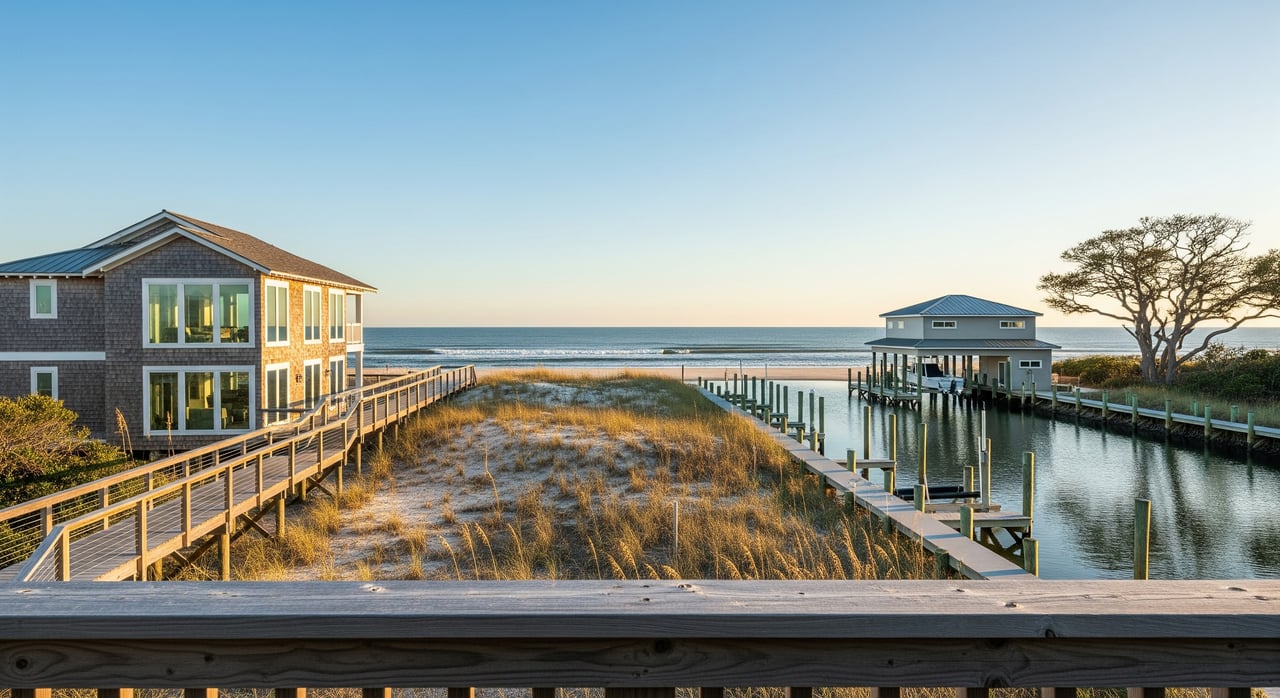
- Demand drivers: private dock or boat slip, fishing and kayaking, calm water views, quick access to waterways.
- Guest profile: anglers, boaters, and multigenerational groups who want water access beyond the beach.
- Booking behavior: steadier shoulder-season and off-peak bookings, especially on weekends.
Revenue patterns
- ADR premium: Oceanfront listings typically command higher nightly rates than channel-front homes of similar size and condition. The premium often reflects direct beach access and unobstructed views.
- Occupancy shape: Oceanfront tends to be highly concentrated in summer. Channel-front often maintains more balanced occupancy in spring and fall thanks to boating and fishing demand.
- Volatility: Oceanfront revenue can spike during peak months and drop more sharply in winter. Channel-front revenue may be more even across the year, though top nightly rates are usually lower.
Costs and insurance
- Insurance: Oceanfront homes often face higher wind and flood premiums and larger windstorm deductibles. Channel-front homes may also sit in flood zones. Actual premiums depend on elevation, construction, and flood zone.
- Maintenance: Oceanfront properties experience more salt corrosion, exterior wear, and dune or erosion considerations. Channel-front homes carry dock maintenance, bulkhead repairs, and potential boat-related wear.
- Operating expenses: Expect higher utilities for frequent rental turnover. Factor in HOA dues where applicable.
Financing and resale
- Lender view: Both property types are financeable. Lenders may apply stricter underwriting for high-risk flood zones or heavy reliance on rental income.
- Resale dynamics: Oceanfront can command higher price per foot due to emotional appeal and views. Channel-front attracts boaters and can sell well when dock access and condition are strong.
- Liquidity: Unique features such as private beach access or a quality dock can widen the buyer pool and support pricing.
Management and owner use
- Guest turnover: Oceanfront sees intense peak-week turnover in summer. Channel-front may see more varied lengths of stay in shoulder months.
- Management focus: Oceanfront requires clear beach safety and peak-season house rules. Channel properties need dock rules, clear tie-up guidance, and water-safety info.
- Personal use: Choose channel-front if you want on-the-water boating days. Choose oceanfront if sunrise views and steps-to-sand living are your priority.
Design and amenities that lift ADR
Universal essentials
- Professional photography and aerials that showcase water orientation.
- High-speed Wi-Fi, work-friendly nooks, and good lighting to attract shoulder-season bookings.
- Flexible bedding, multiple bathrooms, high-capacity laundry, and a well-stocked kitchen.
- Durable coastal finishes, responsive messaging, and strong review management.
Oceanfront upgrades
- Maximize views from living spaces and primary suites, with glass railings or wide sliders.
- Beach access features: storage for chairs and umbrellas, an outdoor shower, and clear path signage.
- Covered outdoor dining and lounge space, plus storm shutters where required.
- Family-friendly safety notes and clear beach guidance.
Channel-front upgrades
- Dock details: boat length capacity, cleats, lighting, and a fish-cleaning station if allowed.
- Water-sports kit: kayaks, paddleboards, crab pots, and secure gear storage.
- Trailer-friendly parking and clear instructions for tides and nearby marinas.
- Indoor-outdoor spaces for watching the water, plus a fire pit for evenings.
Pricing and marketing moves
- Use dynamic pricing tied to demand. Set 7-night minimums during peak weeks and 2 to 3 nights in shoulder season.
- Highlight unique value in your listing title and first photo: direct beach path or private dock.
- Offer themed packages, such as fishing weeks with local guide introductions or family beach kits.
- Maintain multi-channel exposure and a direct inquiry path to lower fees.
Expense-reducing choices
- Commercial-grade appliances, tankless hot water, and hard-surface flooring.
- Smart locks with rotating codes to streamline turnovers.
- Landscape and hardscape designed to reduce storm cleanup.
How to model returns
Key inputs to collect
- Purchase price, loan terms, and closing costs.
- ADR and occupancy by month, or by peak, shoulder, and off-season.
- Management fee, platform fees, cleaning costs, HOA dues, property taxes, insurance, utilities, and routine maintenance.
- Other revenue such as cleaning fees passed to guests or pet fees.
- Local lodging and sales tax obligations.
Essential metrics and formulas
- Gross Rental Revenue = ADR × 365 × occupancy rate.
- Management Fee = Gross Revenue × management percent.
- Net Rental Revenue = Gross Revenue + Other Revenue − Platform Fees.
- Net Operating Income (NOI) = Net Rental Revenue − Operating Expenses.
- Debt Service = annual principal and interest.
- Cash Flow Before Taxes = NOI − Debt Service.
- Cash-on-Cash Return = Annual Cash Flow ÷ Total Cash Invested.
- Cap Rate = NOI ÷ Purchase Price.
- Break-even Occupancy = (Operating Expenses + Debt Service) ÷ (ADR × 365).
Illustrative scenarios only
These examples are for structure and discussion. Replace all inputs with Cherry Grove comparables, real quotes, and current loan terms.
Example oceanfront
- Purchase price: $1,200,000
- ADR (weighted): $650; occupancy: 45% (about 164 nights)
- Gross revenue: about $106,600; cleaning income: about $6,000
- Management fee: 25% of gross revenue; other operating costs: about $32,000
- Debt service on a 30% down loan at 6%: about $60,500 per year
- Outcome: higher top-line revenue, but insurance and maintenance can compress NOI. Cash flow varies by exact quotes and loan.
Example channel-front
- Purchase price: $950,000
- ADR (weighted): $475; occupancy: 52% (about 190 nights)
- Gross revenue: about $90,250; cleaning income: about $5,400
- Management fee: 22% of gross revenue; other operating costs: about $27,000
- Debt service on 30-year, 6% with 30% down: about $47,900 per year
- Outcome: steadier occupancy and lower price point can produce similar or better cash-on-cash, with a lower nightly rate ceiling.
How to interpret results
- Oceanfront often wins on peak-season ADR. Channel-front can close the gap with stronger shoulder-season occupancy and a lower acquisition price.
- Compare investment on a normalized basis with Cap Rate and Cash-on-Cash. For vacation rentals, pay close attention to debt service coverage and seasonality.
- Test sensitivity. Model ADR at plus or minus 10 to 20 percent and occupancy at plus or minus 5 to 10 percent to see downside risk.
Break-even occupancy
- Calculate your break-even occupancy for each property. If your expected occupancy sits only a few points above break-even, your investment is more vulnerable to demand swings or rate cuts.
Due diligence, risks, and what to verify
Primary risks
- Flood and storm risk: confirm FEMA flood zone, elevation, past storm history, and insurance availability and deductibles.
- Regulatory risk: current and potential short-term rental rules at the city and HOA level.
- Market saturation: current listing counts versus demand, especially during shoulder months.
- Insurance volatility: premium increases and changing underwriting standards after major storms.
- Erosion and setback: oceanfront rebuildability and dune impacts over time.
- Reputation and management: poor reviews can lower pricing power and occupancy.
Document checklist
- Deed, survey, and any recorded easements, including beach access.
- FEMA flood map, elevation certificate, and recent flood and wind insurance quotes.
- Seller’s rental income and expense statements and occupancy calendars for 12 to 36 months, if available.
- Local tax history, HOA rules and meeting minutes.
- Building permit history and records of major repairs. For channel-front, dock permits and condition reports.
- Current comparable listings and recent reviews for true peer properties.
- Quotes from local property managers and cleaners.
Your next step
If you are weighing oceanfront against channel-front in Cherry Grove, request a side-by-side revenue scenario based on local comps. Share the details below and get conservative, expected, and aggressive cases you can trust.
What to include:
- Property address and type, bed and bath count, parking, and dock specs if applicable.
- Ownership model: full short-term rental, mixed personal use, or long-term rental.
- Your intended financing: down payment percent, interest rate, and term.
- Timing: next 12 months or a specific season for the projection.
- Whether you plan to self-manage or use a property manager.
Want a custom Cherry Grove comps and ROI model, or a private tour of modern coastal properties designed for performance? Reach out to Jack Chazen for a no-pressure consult and a tailored plan.
FAQs
What is the income gap between oceanfront and channel-front in Cherry Grove?
- Oceanfront typically commands higher ADR due to direct beach access, while channel-front often posts steadier shoulder-season occupancy; verify with local comps before deciding.
Which property type books better in winter months?
- Channel-front homes often attract anglers and boaters outside summer, which can support more off-peak and weekend bookings than oceanfront.
How do flood zones affect my insurance costs in Cherry Grove?
- Premiums depend on FEMA flood zone, elevation, construction, and proximity to open water; oceanfront usually faces higher wind and flood costs than channel-front.
What permits or licenses are required for short-term rentals?
- You should confirm North Myrtle Beach short-term rental registration and occupancy rules, plus HOA restrictions and lodging tax procedures for city, county, and state.
Which amenities most increase nightly rate and bookings?
- Direct beach access or a private dock, professional photos, flexible bedding, fast Wi-Fi, and thoughtful extras like kayaks or beach gear typically lift ADR and occupancy.
Should I self-manage or hire a property manager in Cherry Grove?
- A manager can streamline turnovers, pricing, and guest service, but fees reduce NOI; self-management can improve margins if you have time and systems.
How do I compare two homes with different prices fairly?
- Normalize with Cap Rate, Cash-on-Cash Return, and a break-even occupancy test using the same ADR and occupancy assumptions pulled from true comparables.
What minimum stay rules work best for peak and shoulder seasons?
- Many operators set 7-night minimums in summer peak weeks and 2 to 3 nights in spring and fall to balance rate integrity and occupancy.